
The Indian legal landscape underwent a historic transformation on July 1, 2024, when the Bharatiya Nagarik Suraksha Sanhita (BNSS) officially replaced the century-old Code of Criminal Procedure (CrPC). As we move further into 2026, the implications of these changes have become clearer through various High Court and Supreme Court interpretations. For anyone currently entangled in legal proceedings, understanding how to get bail in India under this new regime is no longer just helpful: it is essential for survival.
At Legit Solutions, we recognize that facing criminal charges or seeking protection from arrest is an emotionally drenching and traumatic experience. Our mission is to provide the expert legal advice India requires to navigate these complex procedural shifts.
This guide serves as a comprehensive roadmap for understanding your rights under the BNSS and how it differs from the legacy CrPC system.
1. THE ARCHITECTURAL SHIFT: FROM CRPC TO BNSS
The transition from the CrPC to the Bharatiya Nagarik Suraksha Sanhita (BNSS) is not merely a name change; it represents a fundamental shift in how the state balances individual liberty with public safety. While the core philosophy of "bail, not jail" remains a cornerstone of Indian jurisprudence, the BNSS has introduced stricter timelines and modernized definitions.
For instance, the BNSS has standardized the terminology. The confusing phrase "bond with or without sureties" has been streamlined to "bail bond" across the board. Furthermore, the BNSS explicitly recognizes the role of technology, allowing for audio-video electronic means during the examination of the accused and other judicial proceedings. This modernization aims to reduce the delays that historically plagued the CrPC era.
2. MAPPING THE NEW SECTIONS: WHERE TO FILE
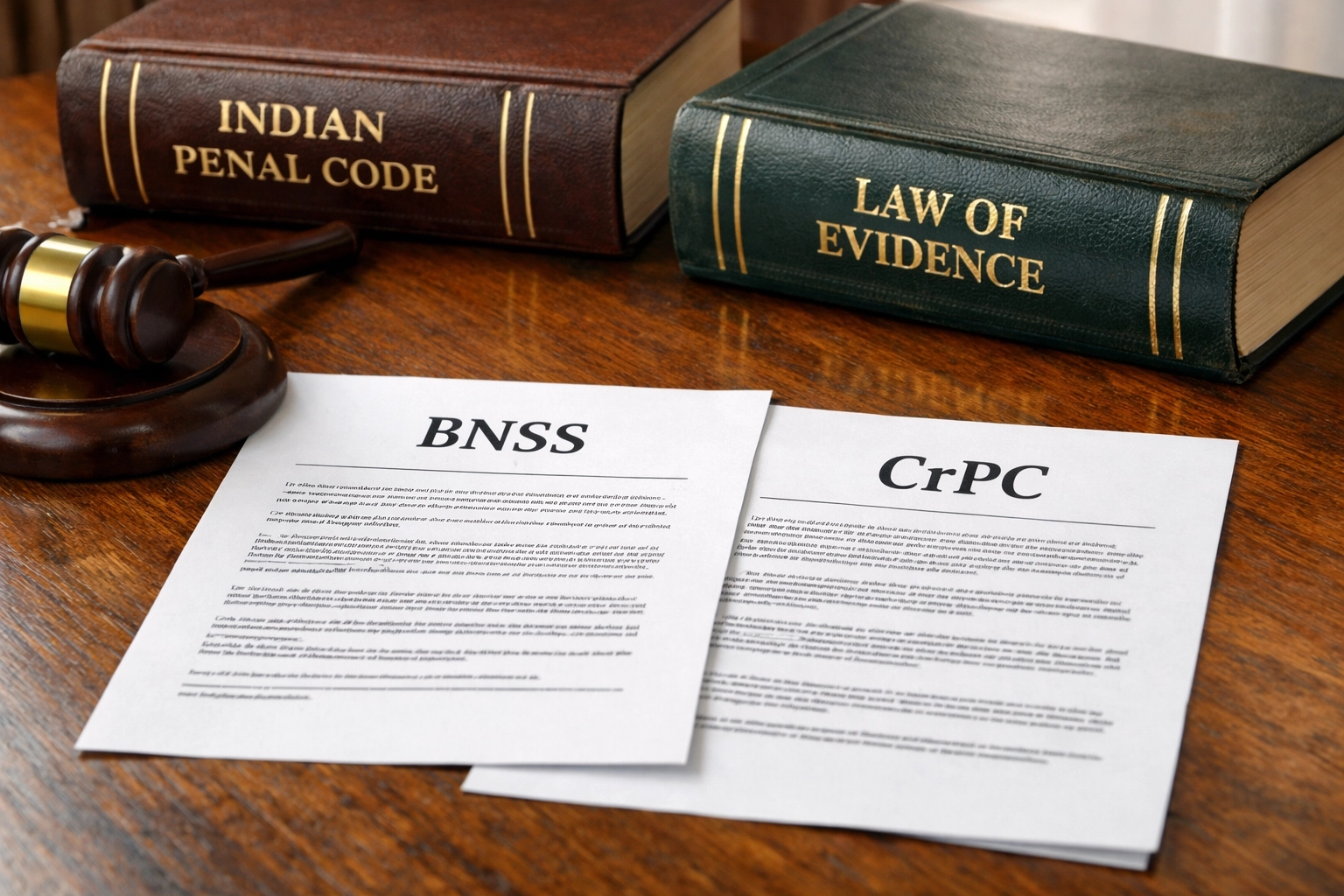
When seeking bail matters, the first hurdle is identifying the correct legal provision. The old CrPC sections that lawyers and litigants knew by heart have been renumbered. It is critical to use the correct statutory references in 2026 to avoid procedural dismissals.
- Bailable Offenses: Under the old CrPC, Section 436 governed bail for minor offenses. This is now Section 478 of the BNSS.
- Non-Bailable Offenses (Magistrate's Court): Section 437 CrPC, which granted Magistrates the power to release an accused, has been replaced by Section 480 of the BNSS.
- Anticipatory Bail: The shield against arrest, formerly Section 438 CrPC, is now found under Section 482 of the BNSS.
- Special Powers of High Court/Sessions Court: Section 439 CrPC, often used for regular bail in serious crimes, is now Section 483 of the BNSS.
If you are confused about which provision applies to your specific case, our team at Legit Solutions is equipped to provide the precise legal services India demands in this transitional period.
3. THE "1/3RD RULE" FOR FIRST-TIME OFFENDERS (SECTION 479)
One of the most progressive changes introduced by the BNSS is the reform regarding undertrial prisoners. Under the old Section 436A of the CrPC, an accused could generally seek bail after serving half of the maximum sentence for the alleged crime.
Section 479 of the BNSS introduces a revolutionary "1/3rd Rule." If an individual is a first-time offender (defined as someone who has never been convicted of any offense in the past), they are entitled to be released on bail after undergoing detention for one-third of the maximum imprisonment period prescribed for that offense.
Critical Update: The Supreme Court has clarified through recent rulings that this beneficial provision can have retrospective application. This means that even if the FIR was registered before July 1, 2024, first-time offenders can seek relief under the 1/3rd rule of the BNSS. This is a vital relief for thousands of undertrials across India.
4. ANTICIPATORY BAIL: PROTECTIONS AND PROHIBITIONS (SECTION 482)
Securing an Anticipatory Bail (AB) is often the only way to prevent the social stigma and personal trauma associated with police custody. While the essence of Section 482 BNSS mirrors the old Section 438 CrPC, there are now explicit restrictions.
Under the BNSS, the law has taken a stricter stance on specific heinous crimes. Anticipatory bail is now categorically prohibited for individuals accused of offenses involving aggravated forms of rape (specifically under Sections 65 and 70 of the BNSS/BNS framework).
At Legit Solutions, we emphasize that time is of the essence in AB matters. We provide criminal law support to ensure that your application is filed with the necessary foresight to protect your liberty before the police can effectuate an arrest.

5. STAGGERED POLICE REMAND: THE IMPACT OF SECTION 187
Perhaps the most debated change is the expansion of police remand periods. Under the CrPC, police custody was generally limited to the first 15 days of arrest. Section 187 of the BNSS has changed this dynamic significantly.
The police can now seek custody in staggered intervals. This custody can be spread across the first 40 days (for offenses with sentences up to 10 years) or the first 60 days (for offenses with sentences of 10 years or more, including life imprisonment or death).
While this does not necessarily mean the total duration of custody has increased beyond the 15-day limit in all cases, the "staggered" nature means the police can take an accused back into custody multiple times within that initial 40 or 60-day window. This makes the initial bail application under Section 480 or 483 BNSS even more critical to prevent prolonged cycles of interrogation.
6. APPLICABILITY: OLD FIRS VS. NEW PROCEDURES
A common question we receive at our contact page is: "My FIR was filed in 2023. Does the CrPC or the BNSS apply to my bail application filed today?"
The consensus among various High Courts (including trends from the Gauhati High Court and recent Supreme Court observations) is that the procedure is governed by the law in force on the date the application is filed.
Therefore, even if the underlying crime was committed years ago and the FIR is registered under the old Indian Penal Code (IPC), any bail application filed after July 1, 2024, must strictly follow the procedural requirements of the BNSS. This means your lawyer must cite BNSS sections and adhere to the BNSS timelines for filing and hearings.

7. STEP-BY-STEP: HOW TO GET BAIL IN India UNDER BNSS
Navigating the bail process requires a methodical approach. We recommend the following steps for those seeking relief:
- Immediate Assessment: Identify if the offense is bailable or non-bailable. Bailable offenses offer bail as a matter of right (Section 478 BNSS).
- Verify First-Offender Status: Check if the 1/3rd rule under Section 479 applies to you for early release.
- Drafting the Application: Ensure the application is filed under the correct BNSS section (480, 482, or 483). Use the new nomenclature of "Advocate" instead of "Pleader."
- Addressing the Remand: Be prepared to argue against staggered police remand under Section 187 if the police seek custody beyond the initial period.
- Electronic Lodging: Utilize the new BNSS provisions for electronic filing and virtual appearances to expedite the hearing if physical presence is difficult.
8. WHY PROFESSIONAL LEGAL SERVICES MATTER
The transition from CrPC to BNSS is not just a change in section numbers; it is a change in the "rules of the game." A minor procedural error or citing a repealed CrPC section can lead to unnecessary delays or rejection of your bail plea.
Legit Solutions has been at the forefront of this legal evolution. We believe that every individual deserves a fair chance at liberty. Whether you are dealing with family law disputes that have turned criminal, or complex civil suits involving allegations of fraud, our team provides tailored strategies to protect your rights.
Our seasoned experts simplify complex procedural hurdles, ensuring that your bail application is not just a document, but a robust defense of your constitutional right to liberty. We understand the emotional stakes, and we are here to ensure that "bail, not jail" remains a reality for our clients.
CONCLUSION: SECURING YOUR FREEDOM IN THE BNSS ERA
As of 2026, the BNSS is fully integrated into our judicial system. While the new law introduces stricter remand rules and restrictions on anticipatory bail for certain offenses, it also provides significant relief for first-time offenders and modernizes the process through technology.
Staying informed is your first line of defense. If you or a loved one are seeking legal advice India can trust, or if you need to understand the nuances of how to get bail in India under the new Sanhitas, reach out to us.
Live happily or part amicably: but always ensure your legal rights are protected. For more updates on the latest legal trends, visit our news section or learn more about us and how we can assist in your legal journey.

Leave a Reply
Want to join the discussion?Feel free to contribute!